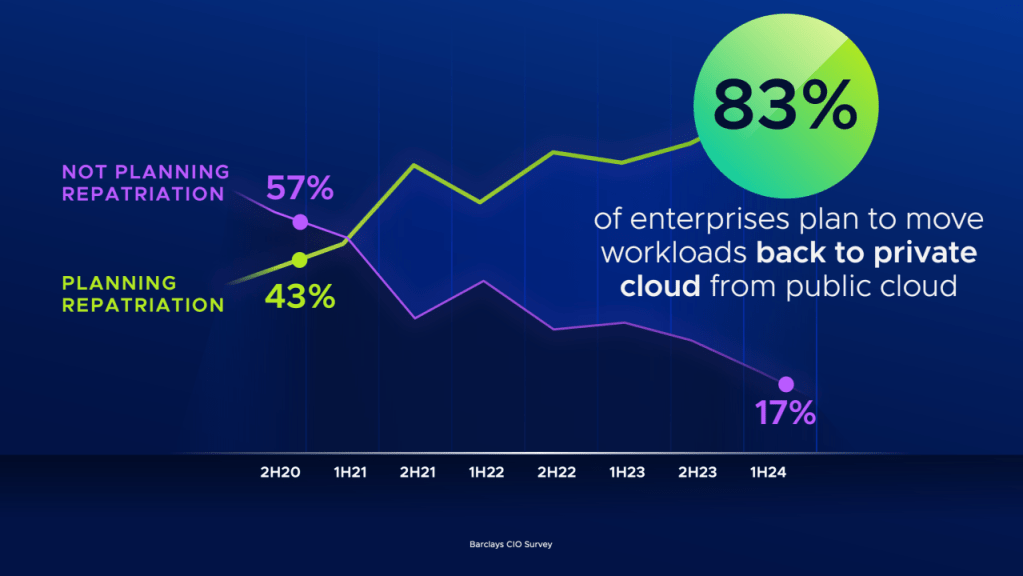
Over the past decade, enterprises have embraced hyperscalers as the default destination for workloads. The promise of infinite scalability, cost savings, and simplified operations lured companies into large-scale cloud migrations. Yet, as the dust has settled, many organizations are discovering that the cloud is not always the most efficient, secure, or economical place for every workload.
This realization has fueled a growing trend: workload repatriation, the process of moving workloads from the cloud back to on-premises environments. Far from being a retreat from innovation, this trend signals digital maturity. Companies are redefining their IT strategies, aiming for a balanced hybrid model that takes advantage of both cloud and on-premises strengths.

Why Repatriation Is on the Rise
Cloud adoption brought undeniable benefits: agility, global scalability, and the ability to experiment without heavy upfront investments. But as cloud bills soared, latency issues emerged, and sovereignty concerns mounted, IT leaders began to question whether some workloads truly belonged in hyperscaler environments.
Workload repatriation is not about rejecting the cloud but about right-sizing infrastructure. It’s about locating workloads where they deliver the highest business value. For many organizations, that means shifting some functions back to data centers they own and operate.

Cost Optimization: The Biggest Driver
One of the strongest arguments for repatriation is cost. Hyperscalers thrive on a flexible, consumption-based model, which can initially look attractive. However, unpredictable usage patterns and hidden expenses (such as data egress fees) often lead to spiraling bills.
In contrast, on-premises infrastructure offers:
- Predictable costs with upfront capital expenditure followed by consistent operational expenses.
- Lower long-term TCO for stable, predictable workloads.
- Leverage of existing assets such as hardware and software licenses, turning sunk costs into ongoing value.
For example, large-scale analytics, high-volume storage, and steady workloads often prove cheaper on-premises than in the cloud over time.
Better Performance and Reduced Latency
Performance is another area where on-premises can outshine hyperscalers. When workloads depend heavily on low latency—such as financial trading, supply chain optimization, or real-time data processing—the cloud introduces unavoidable delays. Cloud servers, no matter how powerful, are still hosted in shared and often distant environments that introduce variability.
By bringing those workloads back on-premises, organizations benefit from:
- Sub-millisecond latency for critical applications running close to users.
- Stable performance free from the “noisy neighbor” effect in multi-tenant cloud infrastructure.
- Faster processing for compute-intensive workloads such as AI training, rendering, or advanced simulations.
Greater Control and Data Sovereignty
In an era of increasing security threats and tightening compliance regulations, control is paramount. Keeping sensitive data on-premises allows organizations to design robust, customized security measures aligned with their risk posture.
The advantages include:
- Data residency compliance, meeting local and regional requirements.
- Granular control over infrastructure with no reliance on provider-managed parameters.
- Reduced security risks, as workloads are less exposed to shared environments.
For industries such as healthcare, finance, and government, these benefits are not optional—they’re mandatory.
Hybrid Flexibility Without Lock-In
Workload repatriation does not mean abandoning the cloud altogether. Instead, it allows enterprises to craft thoughtful hybrid architectures. In such models, stable and critical workloads remain on-premises, while cloud resources handle elastic, burstable, or globally distributed workloads.
This hybrid approach enables enterprises to:
- Avoid vendor lock-in, reducing dependency on a single provider’s ecosystem.
- Adopt multi-cloud strategies, placing the right workloads in the right environments.
- Build resilience, ensuring that operations continue even if one platform experiences disruption.
When executed well, this flexibility creates an IT environment that is more adaptable to both market needs and regulatory changes.
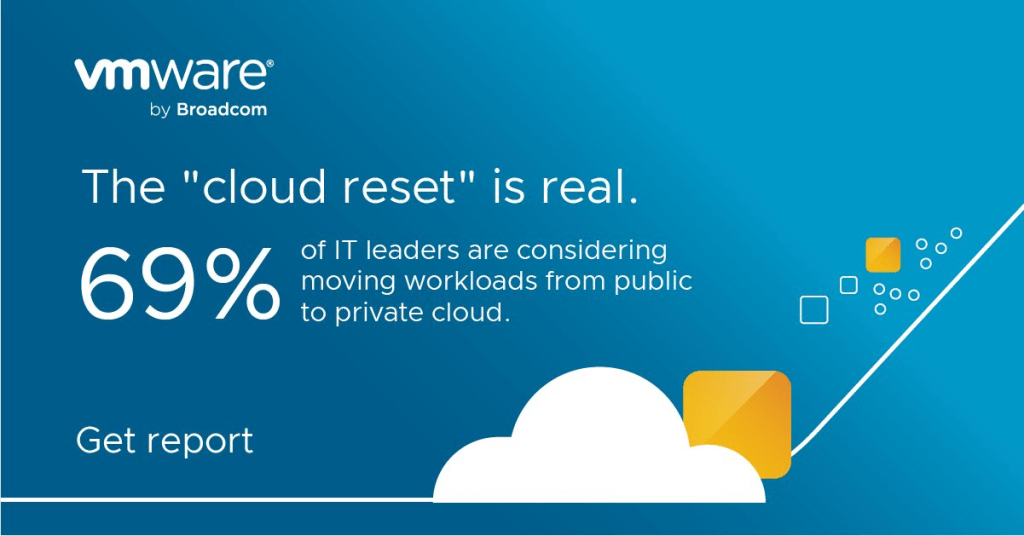
Sustainability and Energy Efficiency
Sustainability has become a strategic priority for many organizations, and workload placement plays a role in meeting environmental goals. Hyperscalers are vocal about their renewable energy commitments, but on-premises operations can rival or even beat them when carefully designed.
Organizations running workloads locally can:
- Optimize hardware use based on actual demand, avoiding wasteful overprovisioning.
- Power data centers with local renewable sources or efficient cooling systems.
- Extend hardware lifespan and implement responsible recycling practices.
In this way, repatriation can align with both financial and environmental objectives.
Comparative Metrics: Cloud vs. On-Premises
| Metric | On-Premises | Hyperscalers (Public Cloud) |
|---|---|---|
| Total Cost of Ownership (TCO) | Upfront CapEx; predictable and stable OpEx | Lower entry costs but spiking long-term OpEx |
| Latency | Sub-millisecond for local workloads | Typically 20–100ms depending on network distance |
| Performance Consistency | Stable throughput with dedicated infrastructure | Possible variations due to shared resources |
| Scalability | Limited to existing infrastructure capacity | Virtually limitless on-demand scaling |
| Data Sovereignty | Complete control; local jurisdiction | Dependent on hyperscaler’s data center policies |
| Sustainability | Tailored local solutions; efficient capacity use | Renewable investments but less user control |
| Vendor Dependency | Flexibility in hardware/software choices | High risk of vendor lock-in and egress costs |
A Sign of Digital Maturity
For many companies, the initial migration to the cloud was an experiment in agility. Today, workload repatriation reflects a deeper understanding of how to align IT infrastructure with business strategy. This shift indicates maturity: enterprises now have the experience and tools to evaluate workloads individually, placing them where they make the most sense.
- Agile, unpredictable, globally distributed applications flourish in the cloud.
- Predictable, heavy, and sensitive workloads run more efficiently on-premises.
By embracing repatriation, enterprises transform cloud adoption from a blanket strategy into a nuanced one, tailored to maximize value.

Conclusion
Workload repatriation is more than a cost-cutting exercise—it is a strategic evolution. By moving select workloads back on-premises, businesses gain control, predictability, and security, without losing the flexibility that made the cloud attractive in the first place.
The future of IT infrastructure is not exclusively cloud or on-premises. It is hybrid by design, where organizations dynamically place workloads where they perform best, aligning technology with both business goals and regulatory realities. Repatriation is not a retreat; it is a recalibration—one that mature organizations are embracing to achieve smarter, more resilient, and more cost-effective infrastructures.


