VMware Cloud Director 10.5.1

VMware Cloud Director 10.5.1 is now available, and it brings a number of new features and enhancements to the cloud management platform. This release is focused on simplifying cloud operations, enhancing security, and improving automation.


Some of the highlights of VCD 10.5.1 include:

  • VMware Cloud Director Cell Certificate Management Through the UI
  • Newly generated self-signed certificates include SubjectKeyIdentifier and AuthorityKeyIdentifier certificate extensions
  • VCD Tenancy Aligned to NSX Projects
  • Provider Topology Intentions

    Advertisement Strict

    Advertisement Flexible

    All Networks Advertised
  • Configuration of NAT and Firewall Service Intentions on a Provider Gateway
  • NAT For Provider Gateway
  • Firewall Rules Configuration on Your Provider Gateway
  • BGP Provider and Tenant Configuration
  • BGP Permission Groups Configuration
  • NSX Advanced Load Balancer Self-service WAF
  • NSX Advanced Load Balancer Virtual Service Logging Analytics
  • DHCP Static Bindings
  • More than one IdP integration with VMware Cloud Director
  • End User License Agreement (EULA) for Container Applications Imported from VMware Marketplace
  • VMware Cloud Director Encryption Management
  • New Organization: Traversal Right
  • Standalone Virtual Machine Metadata Tags
  • The VMware Cloud Director UI displays the current organization name

Here are some additional resources that you may find helpful:

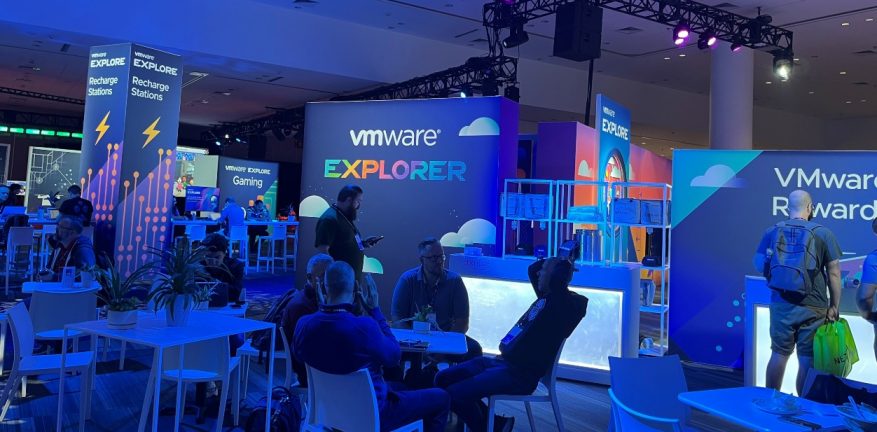
VMware Explore: I’m excited to be there!

Next week, I’ll be attending VMware Explore, the largest cloud-native event in the world. I’m excited to learn about the latest innovations in multi-cloud, cloud-native computing, and digital transformation. I’m also looking forward to networking with other IT professionals and industry experts.

VMware Explore is a great opportunity for IT professionals to learn about the latest trends and technologies in cloud computing. The event features a wide range of sessions, hands-on labs, and workshops on topics such as:

  • Multi-cloud management
  • Cloud-native application development
  • Security and compliance
  • Digital transformation
  • And more!

I’m particularly interested in learning more about how VMware is helping organizations to accelerate their cloud transformation journey. I’m also looking forward to hearing from industry experts about the latest trends in cloud computing and how they are impacting businesses of all sizes.

In addition to the educational sessions, VMware Explore is also a great opportunity to network with other IT professionals and industry experts. The event features a variety of networking events, such as receptions, dinners, and after-hours parties. I’m looking forward to meeting new people and learning about their experiences with VMware technologies.

If you’re attending VMware Explore next week, be sure to stop by and say hello! I’ll be at the VMware booth and at some of the sessions. I’m always happy to talk about cloud computing and VMware technologies.

See you in Barcelona!

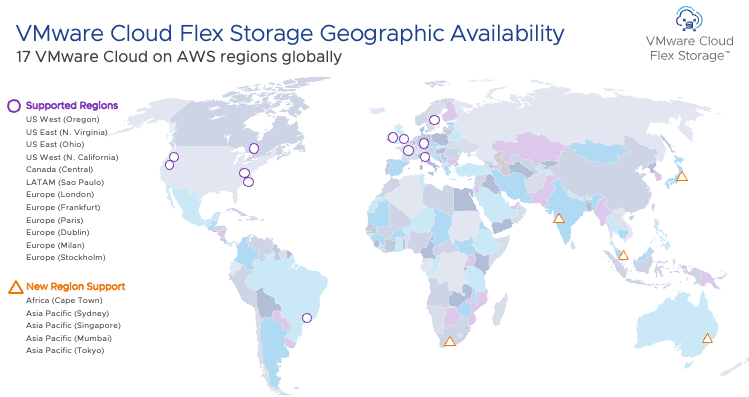
VMware Cloud Flex Storage for Cloud Services Providers 

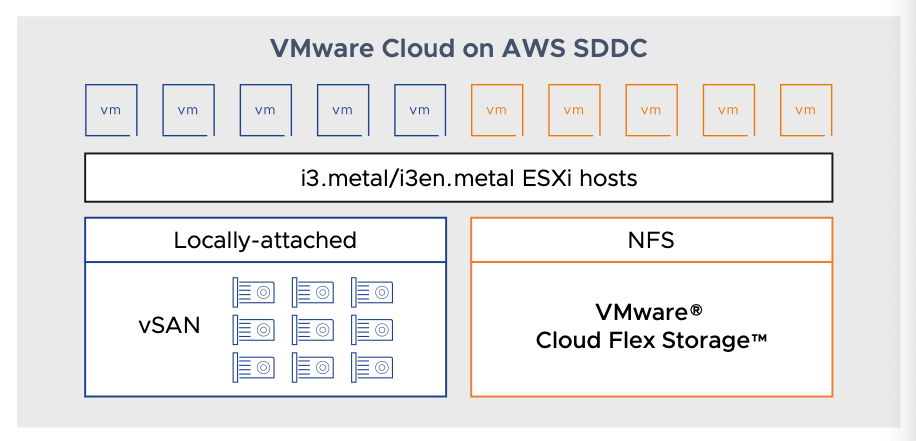
VMware Cloud Flex Storage delivers a disaggregated, elastic, and natively integrated storage service for VMware Cloud on AWS that is fully managed by VMware. With VMware Cloud Flex Storage, partners can scale storage and compute independently of each other and pay for only the resources they use. 


With unparalleled power and flexibility, VMware Cloud Flex Storage offers:

• Independent scaling of storage capacity so you can scale storage capacity without purchasing additional hosts.

• On-demand and elastic scaling of storage to elastically adjust storage capacity up or down as needed.

• Natively integrated storage service for VMware Cloud on AWS with the ability to easily attach datastores with a few clicks from the VMware Cloud Console.

• Fully managed solution that is sold, operated, and directly supported by VMware.

• Built-in enterprise-class storage features that utilize built-in, always-on data services, including at-rest encryption, global deduplication and compression, and data integrity.

• Flexibility to pay only for the storage that you consume under a simple price per GB pricing model.

VMware Cloud Flex Storage Use Cases

Seamless and cost-effective migration

• Reduce complexity
• Reduce time-to-value • Reduce cost

Elastic data center extension

• Dynamically scale resources
• Flexibly consume across clouds • Consistent hybrid cloud

Scaling of storage-intensive workloads

• Independently scale storage
• Scale large volumes of data
• Agile, flexible and cost-effective

Advantages of VMware Cloud Flex Storage

Scalable & Elastic:

• ​Scale storage without  adding hosts
• Elastic scaling of capacity
• Delivered on demand

​Simplified Operations:

• ​​Fully managed by VMware
•​Natively integrated into VMware Cloud on AWS
• ​Simple and easy-to-use

​​Predictable Cloud Economics:

• ​​​Pay-as-you-consume
• Simple $/GiB pricingCost effective

VMware Cloud Director Container Service Extension 4.1

VMware CSE (Container Service Extension) 4.1 was launched by VMware.

New Features:

  • Airgap functionality: VMware Cloud Director Container Service Extension 4.1 can function in an airgapped environment through the use of a local container registry.
  • Node Health Check Configuration: It is now possible to configure Node Health Check parameters in a Tanzu Kubernetes Grid clusters through the Kubernetes Container Clusters 4.1 UI plug-in. Such parameters can detect node failure, and ensure node remediation.
  • Minor version upgrade: You can now perform a minor version upgrade for the VMware Cloud Director Container Service Extension server through the Kubernetes Container Clusters 4.1 UI plug-in.
  • The Auto-repair on Errors toggle in the Tanzu Kubernetes Grid cluster creation workflow is deactivated by default in VMware Cloud Director Container Service Extension 4.1. Service providers must advise tenant users of this as it is a behavioral change from VMware Cloud Director Container Service Extension 4.0.
  • Ability to view Tanzu Kubernetes Grid clusters in Kubernetes Container Cluster UI that were created directed in the Kubernetes Cluster API Provider for VMware Cloud Director (CAPVCD) command line.
  • Additional Tanzu Kubernetes Grid and Kubernetes support: It is now possible to use the following Tanzu Kubernetes Grid and Kubernetes versions with VMware Cloud Director Container Service Extension 4.1:

    Tanzu Kubernetes Grid 2.1.1 with Kubernetes 1.22, 1.23, and 1.24.
    Tanzu Kubernetes Grid 2.2.0 with Kubernetes 1.23, 1.24, and 1.25

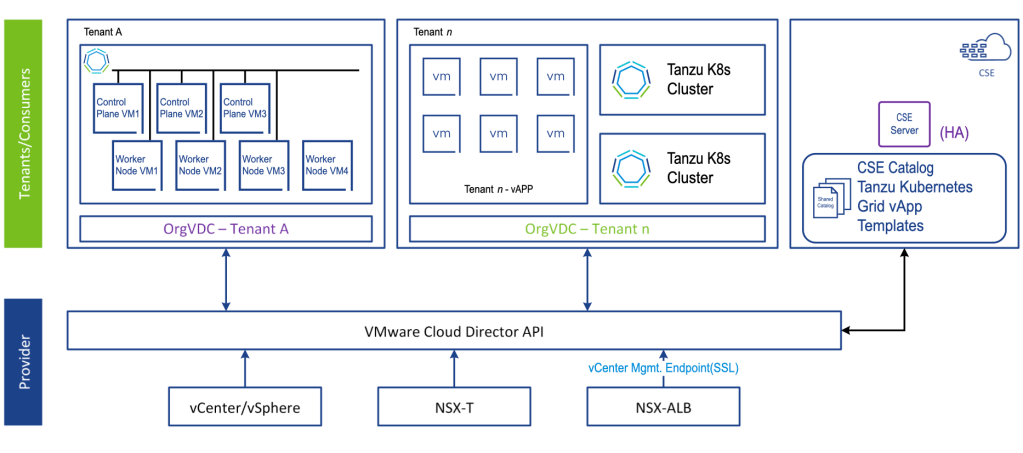
VMware Cloud Director Container Service Extension Logical Architecture

VMware Cloud Director 10.5

VMware today announced the release of VMware Cloud Director 10.5

The new release includes a number of new features and enhancements, including:

  • Content Hub – Enhanced Catalog and Content Management

This release introduces a completely new user experience to providers and tenants for accessing application images, such as vApp Templates, ISO files, and container application images in the form of Helm charts. Providers can create and share to tenants catalogs that are backed by the local VMware Cloud Director storage, or populated with application images that are imported from VMware Marketplace and third-party Helm chart repositories. Content Hub merges the existing VMware Cloud Director Catalog and App Launchpad into a unified experience for tenants and providers. Content Hub does not require installing any additional components.

  • NSX Federation with VDC Groups


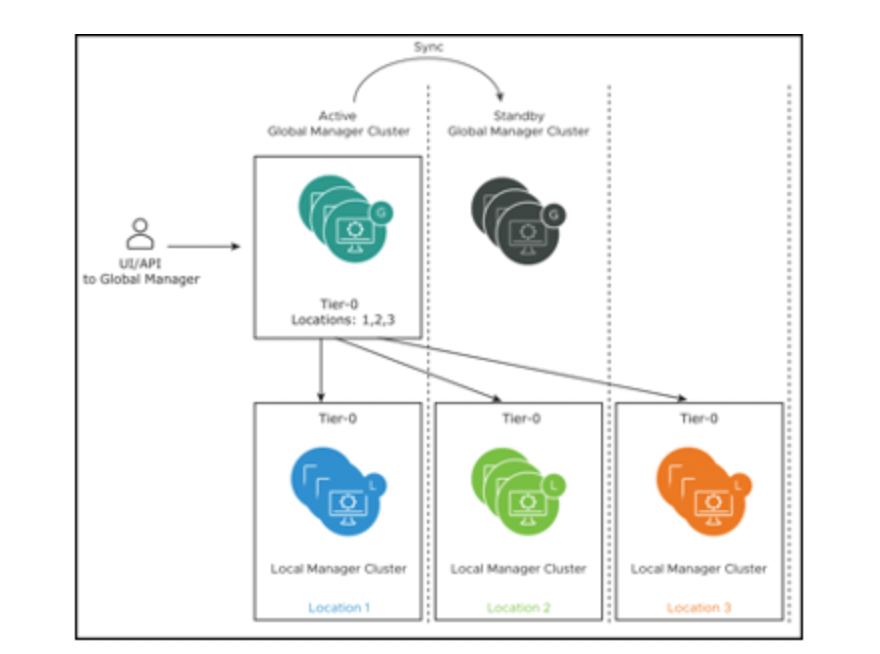
VMware Cloud Director now supports NSX Federation. You can register an NSX Global Manager instance that coordinates security policies across regional local NSX Manager instances in your VMware Cloud Director environment. You can include up to 4 NSX Manager instances in a single VDC Group. Using NSX Federation with VMware Cloud Director is limited to Stretched Tier 0 and Tier 1 Gateways. This means that the provider gateway that is associated with your global NSX Manager instance and with a data center group defines the boundaries of the data center group. By leveraging NSX Federation, you have more choices in establishing networking availability zones by disaggregating NSX Manager instances across regional data centers.

  • NSX Advanced Load Balancer HTTP Policies

VMware Cloud Director 10.5 provides a tenant self-service UI for NSX Advanced Load Balancer HTTP policies configuration for virtual services. The functionality includes HTTP request, HTTP response, and HTTP security policies. You can use HTTP request policies to modify requests before they are either forwarded to the application, used as a basis for content switching, or discarded. You can use HTTP response policies to evaluate and modify responses and response attributes that a virtual application returns. Finally, you can also use HTTP security policies to configure allowing or denying certain requests, to close a TCP connection, to redirect a request to HTTPS, to apply a rate limit, or to provide a static page response in case of an outage

  • IP Spaces Migration UI Wizard

You can use the IP Spaces Migration UI wizard to migrate any provider gateway in your environment to IP spaces from the legacy IP blocks

  • BGP Enhancements

    The new BGP route maps tab allows customers to specify additional configurations for route redistribution. The route maps are only available to provider gateways that use IP spaces. You can configure route maps with IP prefixes and community lists that are defined on the provider gateway in the other BGP tabs.
  • Improved Firewall Rules UI

    VMware Cloud Director 10.5 provides enhanced user experience for firewall rule expressions. You can now create a single firewall rule and, optionally, position it at a specific position in the rules list, and reorder a single firewall rule without editing the entire list of existing firewall rules. You can also add ranges and individual IP addresses directly into the firewall rule Source and Destination text boxes. Firewall rules now have a loggingId element that corresponds to the NSX rule_id.
  • Generation of Autoconfigured Default NAT and Firewall Rules for Edge Gateways and Provider Gateways

    If you are using IP spaces, you can generate and apply autoconfigured default SNAT, NO SNAT, and firewall rules on edge gateways and provider gateways in your environment. VMware Cloud Director autoconfigures the SNAT, DNAT, and firewall rules depending on the topology of the relevant IP spaces and their external and internal scopes
  • Catalog Publish – Subscribe Performance Improvements

    Reduced the time it takes to sync content during in catalog publish-subscribe across Cloud Director instances. The publish – subscribe sync is also more resilient with respect to data transfer disruptions. In our testing catalog sync of a vApp template of size 10 GB that would take over 1 hour to sync in previous releases would now complete in under 15 minutes. This was achieved by breaking up data into chunks and introducing concurrency in data transfer.
  • Ability to Upgrade Solution Add-Ons and to Publish Solution Add-Ons to Tenants

VMware Cloud Director 10.5 introduces the ability to upgrade your solution add-on instances when a new version becomes available. You can also publish solution add-ons to some or to all of your tenants

  • Leverage Shared Datastores Across Multiple vCenter Servers

    In earlier releases, when moving VMs across different vCenter Servers, the placement engine did not consider the shared datastores between the vCenter Servers. This resulted in a copy operation involving export and import of the OVF. Starting with VMware Cloud Director 10.5, the placement engine provides shared datastore recommendations to prevent the OVF export and import workflow, and optimizes the move operation by making it faster.
  • Tenant Migration enhancementsIn previous releases, Migrate Tenant Storage would move the VMs and disks regardless of whether the disks are on the selected source datastores. Starting with VMware Cloud Director 10.5, the operation will only move the disks that are on the source datastores.
  • VM discovery enablement at the organization and organization VDC levels

    In previous releases, you can configure VM discovery in VMware Cloud Director at the global level, organization level, and organization VDC level but the global level had precedence over the organization level and the organization level had precedence over the organization VDC level. In versions 10.4.x and earlier, if VM discovery is deactivated at the global level, you cannot activate it at the organization or organization VDC level. Starting with VMware Cloud Director 10.5, you can override the global level VM discovery setting at the organization and organization VDC levels. If you use the /api/admin/extension/settings/general API to set the AllowOverrideOfVmDiscoveryByOrgAndOVDC parameter to true, the organization and organization VDC VM discovery behavior can override the setting at the global level.
  • vCenter Server can back both a provider VDC and a dedicated vCenter Server instance

Starting with VMware Cloud Director 10.5, a provider administrator can activate two advanced settings so that a vCenter Server instance can back both a provider VDC and a dedicated vCenter Server instance. This is an advanced configuration that exposes risks and must only be activated by experienced VMware Cloud Director administrators.

VMware Cloud Director Availability 4.6


Last week, VMware released VMware Cloud Director Availability (VCDA) 4.6, introducing new features and improvements:

  • vSphere to vSphere Recovery Plans
     Can now also be created and run for vSphere DR and migration between vCenter Server sites.
  • Audit Logs
    Now allow auditing the VMware Cloud Director Availability events by using the Cloud Director delivery channel. VMware Cloud Director automatically marks all external events, like the ones received from VMware Cloud Director Availability, as audit events, subject to audit persistence, retention, and export capabilities by using the audit trail system in VMware Cloud Director.
  • Recovery Settings Enhancements
    Now you can map the source and the destination networks per selected replications for on-premises to cloud replications, similarly to the ones from cloud to cloud. 
    vSphere DR and migration now validates the recovery settings (data center, VM folder, compute, and others) based on the replication settings (datastore). The network settings now are similar to Cloud Director sites, and the source and destination network mappings allow per-virtual machine network mapping.
  • vSphere to vSphere DR and Migration Public API
    Now VMware Cloud Director Availability provides a step-by-step guide to configure a deployed appliance by using the VMware Cloud Director Availability API
  • NSX-T vApp Edges Support
    VMware Cloud Director Availability 4.6, backed by VMware Cloud Director 10.3 or later, now supports:

    Replicates routed vApp networks and vApp network services to virtual data centers backed by NSX with error-free automatic destination network mapping.

    Replicates the DHCP service on vApp isolated networks, bringing parity with NSX for vSphere.

    To configure a routed vApp network and use any vApp network services, like DHCP in isolated vApp networks, the containing organization’s virtual data center must be configured with an edge cluster.
  • Guest Customization Global Setting
    A global setting that affects all replications – whether the users need to manually activate or deactivate guest customization on failover
  • Tunnel Appliance High Availability
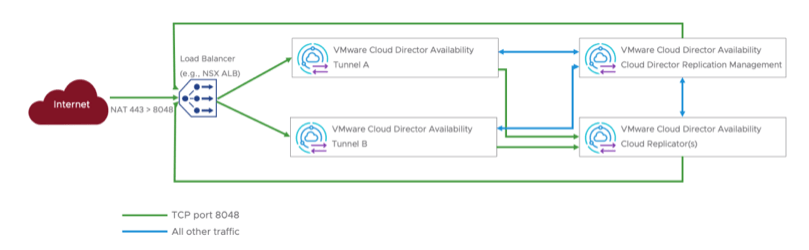
    In Cloud Director sites, now a second Tunnel Appliance can operate in an active-active mode for high availability of the Tunnel Service, both for new deployments and for upgraded ones. 
  • vApp Template Replication
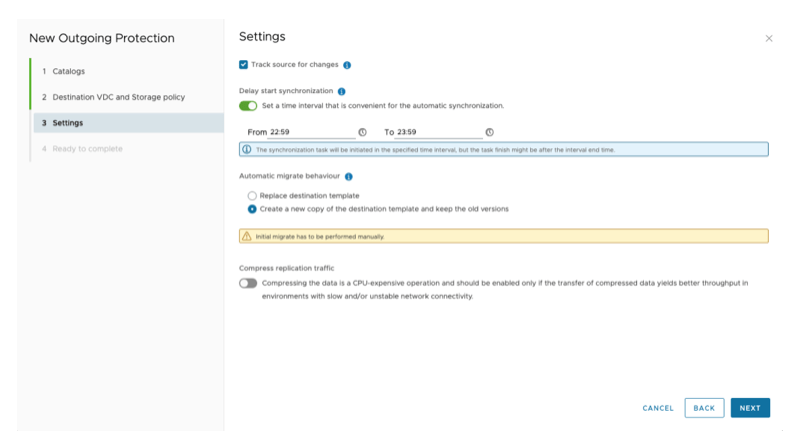
    Replicating vApp templates between Cloud Director sites now includes protecting the vApp templates that permit tracking the source for changes, allowing either creating new destination template versions when the source changes or overwriting the destination.
  • vSphere to vSphere Bandwidth Throttling
    Bandwidth throttling can now also apply throttle for vSphere DR and migration. Note: Applying the limit requires one or more external Replicator Appliance instances.
  • VMC data engine 
    Now allows creating migrations back to the On-premises vCenter Server.

VMware Cloud Director 10.4.2

On April 18th, 2023, VMware Cloud Director 10.4.2 was released, bringing a range of new features. In this blog post, we will highlight some of the key features of this new release.

One of the most significant additions to VMware Cloud Director 10.4.2 is support for Virtual Trusted Platform Module (vTPM) devices. vTPM devices provide improved security to the guest operating system and can be added to both new and existing virtual machines. However, specific prerequisites must be met by both the VM Guest OS and the underlying vCenter Server infrastructure to use vTPM. vTPM is supported in most VCD workflows for Virtual Machine, vApp, Templates, and Catalog Sync.

Another feature in this release is the IDP Proxy for TMC Local. This feature allows VMware Cloud Director to be configured as an identity provider proxy server. With OAuth 2.0 OpenID Connect compliant Identity Providers registered with VMware Cloud Director, relying parties can utilize the platform for tenant-aware user authentication of those already known to the system.

VMware Cloud Director 10.4.2 also includes an improved provider login experience. When accessing the login page at https://vcloud.example.com/ and entering “system” as the organization name, the platform now understands “system” as an organization and will redirect the user to the Service Provider Admin Portal login page.

In previous versions of VMware Cloud Director, the default vApp lease expiration time for newly created tenant organizations was set to 7 days. However, with version 10.4.2, the default vApp lease expiration time setting is now “unlimited” or “never expires.” This change is sure to be a welcome one for many users.

Finally, VMware Cloud Director 10.4.2 introduces two key use cases for NamedDisk Entities. Named Disk Ownership enhances the behavior associated with NamedDisk Entities, providing more control over virtual disks’ ownership and addressing some limitations with virtual disk ownership in previous versions.

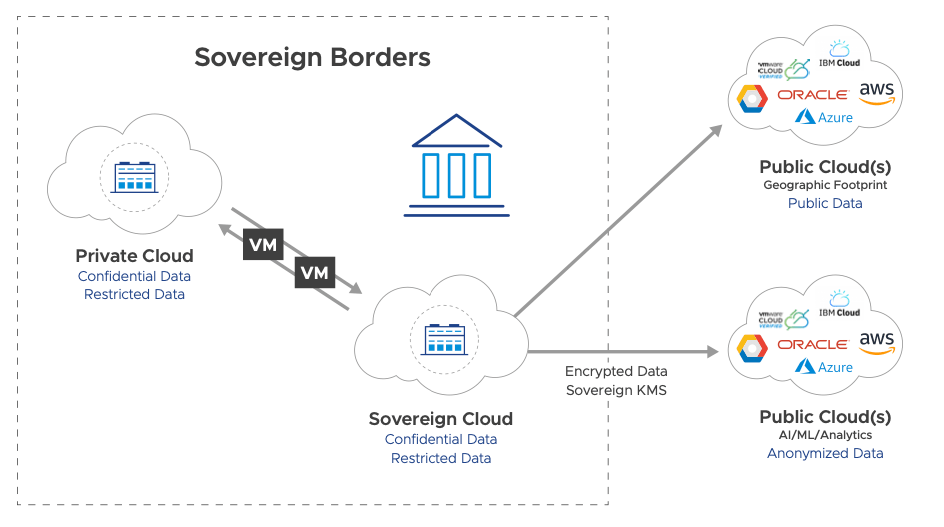
Sovereign Cloud Quick Overview

The rise of cloud computing has transformed the way businesses operate, offering an affordable and scalable solution to store and manage data. However, as cloud adoption continues to grow, concerns around data privacy and security have also increased. To address these concerns, the concept of sovereign cloud has emerged as a viable alternative to traditional cloud providers.

The concept of sovereignty is emerging as a necessary component of cloud computing for many entities that process and maintain highly sensitive data, such as national and state governments, and highly regulated industries, such finance and healthcare. National governments are also looking to expand digital economic capability and reduce reliance on multi-national firms for their cloud services.

VMware defines a sovereign cloud as one that:

• Protects and unlocks the value of critical data (e.g., national data, corporate data, and personal data) for both private and public sector organizations.

• Delivers a national capability for the digital economy

• Secures data with audited security controls

• Ensures compliance with data privacy laws

• Improves control of data by providing both data residency and data sovereignty with full jurisdictional control

While keeping data ‘in’ is a key concern for sovereignty, it is also necessary to securely share data outside of its jurisdiction when warranted. For example, cross- border policing activities and collaboration. The secure sharing and monetization of data across borders is very important as we look to the next generation of currency – data.

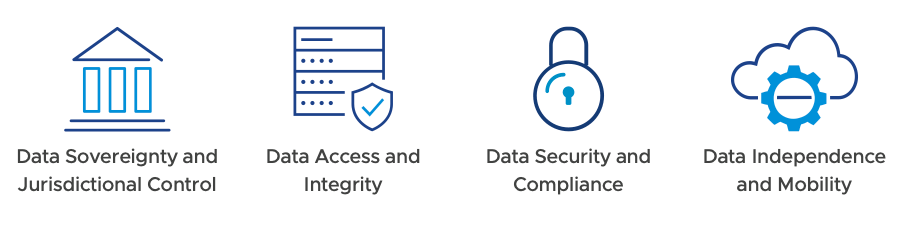
VMware Sovereign Cloud framework principles

Data Sovereignty and Jurisdictional Control – All data is resident and subject to the exclusive control and authority of the nation state where that data was collected. Operations are fully managed within the jurisdiction.

Data Access and Integrity – Cloud infrastructure is resilient and available in at least two data center locations within the jurisdiction with secure and private connectivity options available.

Data Security and Compliance – Information security management system controls are certified against an industry recognized global (or regional) standard and audited regularly.

Data Independence and Mobility – Support for modern application architectures to prevent vendor cloud lock-in and enable application portability and independence.

In conclusion, sovereign cloud offers several advantages that make it an attractive option for businesses that prioritize data privacy, security, and compliance. With reduced latency, cost-effectiveness, sovereign cloud providers are becoming an increasingly popular alternative to traditional cloud providers. As the demand for secure and compliant cloud solutions continues to grow, sovereign cloud providers are well-positioned to meet the needs of businesses in different industries and geographies.

vExpert 2023: I did it again!

Last Friday I was recognised by VMware as vExpert for 7 years in a row. I’m glad to continue being part of this fantastic community and be able to enjoy the program’s benefits. These last 7 years have been incredible, I have had the chance to work closely with people from all over the world, […]

VMware Cloud Director Availability 4.5

VMware has announced General Availability of VMware Cloud Director Availability 4.5 last November.

VMware Cloud Director Availability

VMware Cloud Director Availability is a powerful solution used by VMware Cloud Providers to offer simple, secure, and cost-effective onboarding, migration, and disaster recovery as a service to or between multi-tenant VMware clouds.

What are the core capabilities of VMware Cloud Director Availability?

  • Intuitive disaster recovery as a service protection and wizard-driven workflows to protect virtual machines (VM) or vApps. Replication and recovery of VMs and vApps between VMware Cloud Director (cloud to cloud) or on-premises to VMware Cloud Director and vice versa. The offering is now available for on-premises vSphere to protect and migrate workloads from dedicated on-premises vCenter site to Cloud vCenter.
  • Single on-premises appliance installation for ease of deployment and simplicity for customers replicating to provider vCenter or VMware Cloud Director cloud endpoints. Supports a migration path and DR functionality from vSphere 7.0.
  • The capability of each deployment to serve as both source and recovery endpoints (synchronous sites). There are no dedicated source and destination sites; symmetrical replication flow can be started and managed from either the source or the recovery site, meaning the UI can be accessed from anywhere with the correct context.
  • Migration, protection, and control over retained replications (stored instances) as well as flexible RPO policy controls for providers to apply to one Virtual Data Center (VDC) or individual replications via predefined or flexible SLA policies. This helps to control storage costs and provide tiered services to customers. With the latest release, providers have the option to enable 1-minute RPO for mission-critical applications. Since 4.4, the RPO compliance reporting feature has been introduced to keep cloud providers informed about RPO violations to allow both parties to track, monitor, and audit RPO best practices and aid troubleshooting.
  • Cold or warm migration to provider VMware Cloud Director-based cloud from on-premises via vSphere plugin or via VMware Cloud Director Availability interface in the provider cloud. Cloud providers and tenants can carry out a fast-track migration with the new 1-click migration feature that automatically replicates using static, basic replication settings.
  • Warm one-way migration from vSphere plugin or VMware Cloud Director provider cloud to VMware Cloud on AWS SDDC under Cloud Director service management.
  • Layer 2 stretch networking for simpler migrations (and/or disaster recovery) from on-premises to VMware Cloud Director as well as VMware Cloud on AWS.
  • Secure tunneling through TCP proxy, between sites with built-in encryption and optional compression availability. Cloud to cloud replicant encryption is also supported using Cloud Director encrypted storage policies at the target.
  • Multi-tenant support native within the VMware Cloud Director hierarchy and in-context DRaaS providing administrative simple views and actions directly in VMware Cloud Director. In case of vSphere (V2V) DR and migration, multi-tenancy will be offered in the future. For the moment, this is supported for dedicated vCenter endpoints only.

VMware Cloud Director Availabil- Use Cases

  • On-premises to cloud migration (and vice versa*), on-premises to cloud DR (and vice versa), cloud to cloud DR, cross-version VMware Cloud Director migration.

    *Vice versa not available from/to Cloud Director Org VDC on VMware Cloud on AWS; this is a one-way migration only.
  • Cloud providers using VMware Cloud Director Availability can protect and migrate dedicated on-premises vCenter workloads to vSphere cloud (and vice versa).

To learn more about the VMware Cloud Provider Program, please visit http:// http://www.vmware.com/partners/service-provider.html.