In today’s demanding IT landscape, businesses are constantly seeking ways to optimize resources and reduce operational expenses. VMware Cloud Foundation (VCF) emerges as a powerful solution, offering a multitude of ways to lower your Total Cost of Ownership (TCO). This platform streamlines operations, enhances resource utilization, and provides a unified approach to managing both traditional and modern applications. Let’s delve into five key ways VCF can contribute to significant cost savings for your organization.
1. Enhanced Resource Utilization for Maximum Efficiency
One of the primary benefits of VCF lies in its ability to maximize your existing hardware. By optimizing memory usage, VCF allows you to run a greater number of workloads on fewer physical machines. This directly translates to reduced capital expenditure on new servers. Furthermore, VCF incorporates automated power management features. It intelligently adjusts host power based on real-time demand, leading to a noticeable reduction in energy consumption and associated costs.
2. Revolutionizing Storage with Hyperconvergence
Say goodbye to expensive, proprietary storage solutions. VCF leverages hyperconverged storage, enabling you to run enterprise-grade storage capabilities on standard x86 servers. This approach can dramatically cut down on hardware costs, with potential savings of up to 30% on total storage expenses over a five-year period.
3. A Unified Platform for Seamless Application Management
The complexity of managing diverse application portfolios can be a significant drain on resources. VCF addresses this challenge by providing a single, unified platform for operating both traditional and modern applications. This streamlined approach not only simplifies IT operations but also boosts developer productivity by offering a consistent environment.
4. Embracing the Efficiency of Infrastructure as a Service (IaaS)
VCF delivers a modern Infrastructure as a Service (IaaS) experience. Through a self-service catalog and policy-based automation, it simplifies the provisioning of resources. This empowers teams to access the infrastructure they need quickly and efficiently, reducing manual workloads and freeing up IT staff to focus on more strategic initiatives.
5. Agile and Flexible Networking through Virtualization
Traditional networking can often create bottlenecks and hinder agility. VCF overcomes these limitations by virtualizing the network, which facilitates workload mobility and adaptability. Moreover, it supports virtual private cloud (VPC)-driven networking. This innovative feature allows development teams to consume network services on demand, fostering a more agile and responsive IT environment.
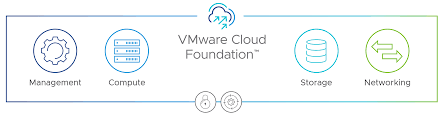
By implementing VMware Cloud Foundation, organizations can achieve substantial reductions in their Total Cost of Ownership through improved resource utilization, cost-effective storage solutions, unified application management, efficient IaaS capabilities, and flexible virtualized networking.


 gnunes.cloud